The Concept
A card, a tale, a voice
Once upon a time, a greeting card could carry more than a wish. It could carry a whole world.
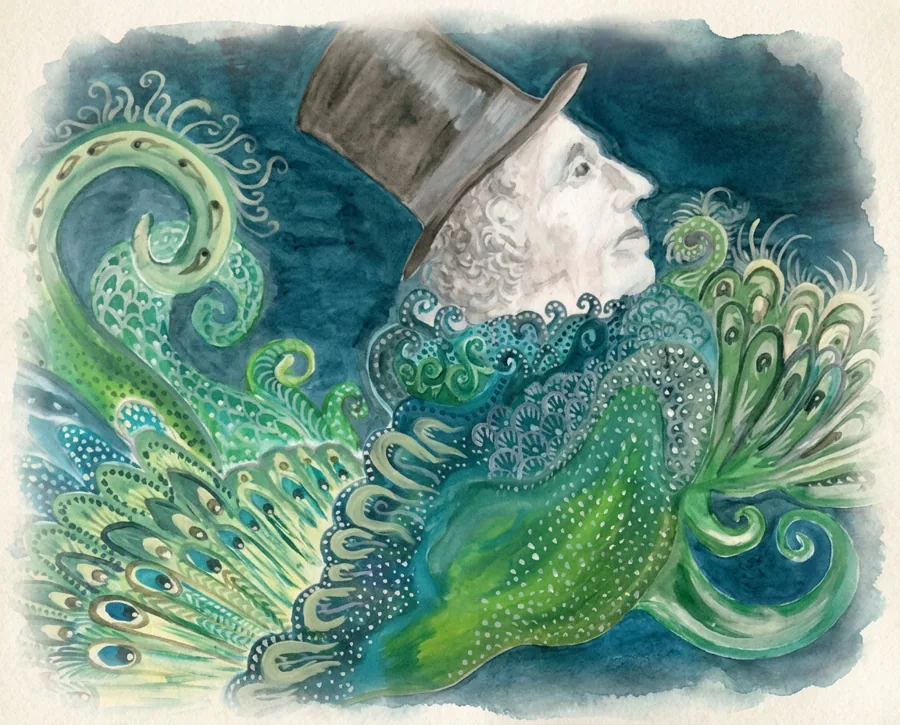
A hand-painted picture
Each card bears a watercolour from Hans Christian Andersen's fairytales — painted by hand by Marius Guldager and printed in Denmark on heavy, high-quality paper.
The fairytale, printed
With every card follows a small booklet, in which the very tale the picture belongs to is printed in your own language — yours to keep, to read aloud, to give away.
And a voice to read it
On the back of the booklet you will find a small QR code. Hold your phone, tablet or computer up to it, and the fairytale is read aloud to you — as if Andersen himself sat beside you.
A picture, a tale, a voice — three small wonders, folded into one card.
Origins
A shoemaker's son — or a prince in disguise?
Hans Christian Andersen was born in Odense in 1805, the son of a poor shoemaker and a washerwoman. Even so, speculation has long surrounded his origins — that he may in truth have carried royal blood, an illegitimate son of Prince Christian (later Christian VIII). No firm evidence supports the theory, and most historians dismiss it, yet Andersen's remarkable journey from poverty to international fame has kept the mystery alive. One thing is certain: the fairy tales endure — much like the speculation about Andersen's beginnings.
Curiosities
A few peculiar things about Hans Christian Andersen
The man behind the fairytales was at least as remarkable as his characters — and a good deal stranger than most people remember.
- He was so afraid of being buried alive that he often left a note on his bedside table reading „I only seem dead”.
- He always travelled with a long coil of rope in his suitcase, in case a hotel caught fire and he had to climb out of the window.
- On a long visit to Charles Dickens in England he overstayed his welcome by weeks; after he finally left, Dickens pinned a card to the guest-room mirror: „Hans Andersen slept in this room for five weeks — which seemed to the family AGES.”
- He was a passionate paper-cut artist. While telling stories aloud he would snip away with a giant pair of scissors and hand the finished silhouette to the listener.
- He never married. Throughout his life he fell in love with both women and men — among them the famous Swedish soprano Jenny Lind, who called him her „brother”.
- At his funeral in 1875 the King and Crown Prince of Denmark were present. Today he is the most translated Danish author in history — read in more than 160 languages.